12 Best Roadside Safety Tips for Drivers
A vehicle problem rarely happens at a convenient time. It happens on a dark shoulder, in fast traffic, during bad weather, or with kids in the back seat. The best roadside safety tips are the ones you can remember under stress and use right away.
If your car breaks down, your first job is not fixing it. Your first job is staying visible, staying clear of traffic, and making smart decisions until help arrives. That applies whether you are dealing with a flat tire, engine trouble, a dead battery, or a more serious roadside incident.
Best roadside safety tips start with where you stop
The moment you notice a problem, think about location before anything else. If the vehicle is still moving, slow down steadily and look for the safest possible place to pull over. A parking lot, wide shoulder, rest area, or side street is better than stopping in a narrow lane or just past a blind curve.
If you are on a highway, try to exit if the vehicle can make it safely. If it cannot, pull as far to the right as possible. Turn your wheels away from traffic if you are stopped on a shoulder. That small step can reduce the chance of the vehicle rolling into moving lanes if it gets hit.
There is a trade-off here. Driving too far on a flat tire or with severe mechanical damage can make the problem worse. But stopping in an unsafe spot can create a bigger emergency. If the vehicle is still controllable, a few extra seconds to reach a safer area are often worth it.
Make your vehicle easy to see
Visibility matters as much as location. Turn on your hazard lights as soon as you know you have a problem. If it is dark, raining, foggy, or snowing, visibility gets worse fast, and other drivers may not realize you are stopped until they are too close.
If you have reflective triangles or road flares and it is safe to place them, use them. Set them far enough behind the vehicle to give approaching traffic more warning. On a high-speed road, that distance needs to be greater than most people think. If traffic is heavy or the shoulder is narrow, though, do not risk walking near moving vehicles just to place warning devices.
At night, keep interior dome lights on only if they help you stay organized without making you less visible outside. Flashlights, reflective vests, and even a bright jacket can make a major difference if you need to step out.
Stay inside when traffic is the bigger danger
Many drivers assume they should always get out right away. That depends on where the vehicle is stopped. On a busy highway with fast traffic, staying inside with your seat belt on is often safer than standing beside the car.
If you are in a relatively protected location, like a parking lot or a wide shoulder far from moving lanes, getting out from the passenger side may make sense. If you smell fuel, see smoke, or think the vehicle could catch fire, move away immediately and take everyone with you.
Children, older passengers, and pets need extra attention here. A stressed driver can easily focus on the vehicle and forget the bigger safety picture. Keep everyone together and away from traffic. Do not let anyone stand between your vehicle and moving cars.
Call for help before you try to solve the problem
One of the best roadside safety tips is also one of the simplest - do not turn a breakdown into a DIY emergency. If you are unsure what failed, if the road is dangerous, or if conditions are poor, call for professional roadside assistance or towing first.
When you call, be ready with your location, direction of travel, vehicle description, and the problem as you understand it. Mile markers, nearby exits, business names, and GPS pin locations all help responders find you faster. If you are in the Niagara Region, choosing an established local operator with trained staff and 24/7 coverage can reduce wait-time uncertainty when every minute feels longer.
If the situation involves a collision, injuries, smoke, or a vehicle blocking traffic, call emergency services right away. Roadside assistance is for breakdowns and recovery. Immediate hazards may require police, fire, or EMS first.
Be careful with flat tires and quick fixes
A flat tire looks manageable until the shoulder is narrow and traffic is moving at 70 mph. Changing a tire yourself only makes sense if the location is safe, the vehicle is stable, and you know exactly what you are doing.
If the ground is soft, sloped, icy, or uneven, a jack can shift. If lug nuts are seized, forcing them loose on the roadside can leave you exposed for too long. If you are close to traffic, the risk usually outweighs the benefit of doing it yourself.
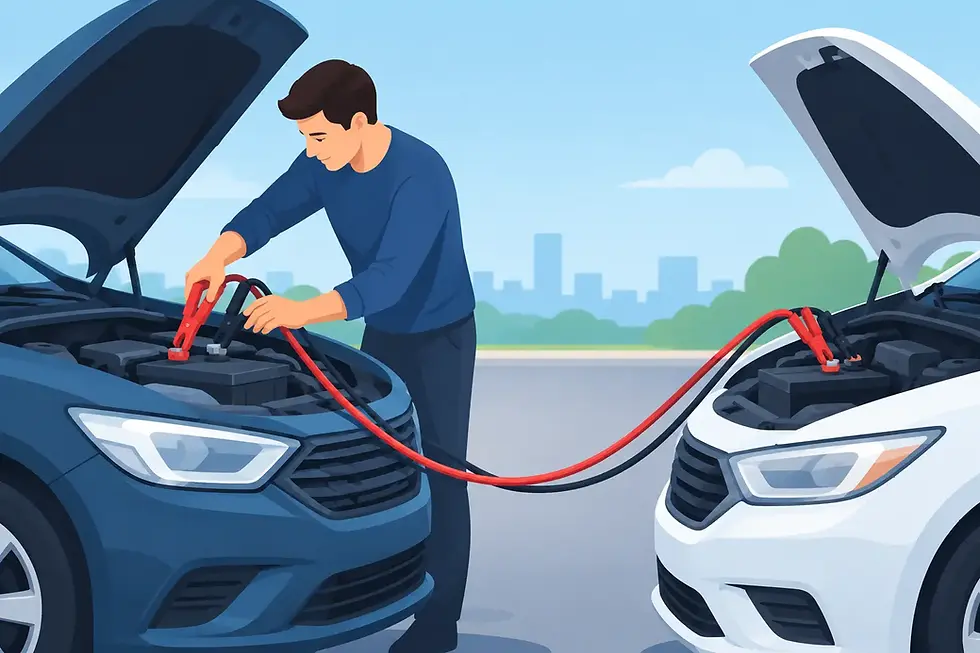
The same goes for jumper cables, temporary tire inflators, and other quick fixes. They can help in the right setting. They can also put you in harm's way if you are standing too close to moving vehicles or working in poor visibility. There is no shame in waiting for trained help.
Keep an emergency kit, but keep it realistic
Drivers often overpack the wrong gear and forget the basics. A useful roadside kit should support safety first and convenience second. A charged phone cable, flashlight, reflective vest, gloves, bottled water, basic first aid supplies, blanket, and warning triangles are more valuable than a trunk full of tools you do not know how to use.
Season matters. In winter, add warm layers, a small shovel, and traction aid. In summer, heat becomes its own hazard, especially if you are stranded with children or older adults. If you drive long distances, travel rural routes, or operate a work vehicle, your kit should be more complete than someone making short city trips.
Also check your spare tire. Many drivers carry one that is underinflated, damaged, or missing the jack components needed to use it. That is a frustrating problem to discover on the shoulder.
Protect yourself while you wait
Once help is on the way, focus on staying safe and reachable. Keep your phone charged if possible, but do not drain the battery with unnecessary apps or calls. In cold weather, run the engine only if it is safe to do so and the exhaust is clear. In hot weather, crack windows if needed and conserve fuel if the delay may be long.
If someone stops to offer help, be cautious. Most people mean well, but roadside situations are vulnerable moments. You can thank them through a closed window and let them know assistance is already on the way. If you do accept help, stay aware of your surroundings and trust your judgment.
This is also a good time to make your vehicle easier to identify. If you have been told what tow truck or service vehicle to expect, confirm details before getting in or handing over keys. Professional operators should be able to identify themselves clearly.
Best roadside safety tips for bad weather and low visibility
Weather changes the rules. Rain shortens braking distance. Snow reduces shoulder visibility. Fog hides stopped vehicles until the last second. In these conditions, even a minor breakdown can become dangerous quickly.
If weather is severe, staying inside the vehicle is often the better choice unless there is fire risk or another immediate threat. Hazard lights should be on, seat belts should stay fastened, and passengers should avoid opening doors facing traffic.
If you slide off the road in snow or mud, be careful about trying to power out. Spinning tires can dig you in deeper or put the vehicle in a worse position. Recovery often requires the right equipment, especially for larger vehicles, all-wheel drive systems, or roadside ditches.
What commercial drivers and fleet operators should keep in mind
For work vehicles, roadside safety is not just personal. It affects cargo, schedules, liability, and public risk. Commercial drivers should follow company protocols, secure the scene if possible, and report exact vehicle condition early. Waiting too long to request heavy-duty towing or recovery can make a bad stoppage worse.
Fleet managers should think beyond response time and consider provider capability. Not every towing company is equipped for larger trucks, equipment, or more complex recoveries. The right partner is the one that can respond safely, not just quickly.
Preparation beats panic
Most roadside emergencies are not fully preventable, but many are made worse by hesitation, poor visibility, or risky decisions. Routine maintenance helps. So does checking tires, battery health, fluid levels, and fuel before longer trips. Prevention will never eliminate every breakdown, but it reduces the odds of facing one in the worst possible place.
The most useful mindset is simple: protect people first, vehicle second. A car can be repaired or towed. A few smart decisions on the roadside can keep a stressful problem from becoming a serious one.
When something goes wrong, take a breath, make the vehicle visible, choose safety over speed, and get the right help involved. That is what gets drivers home safely.