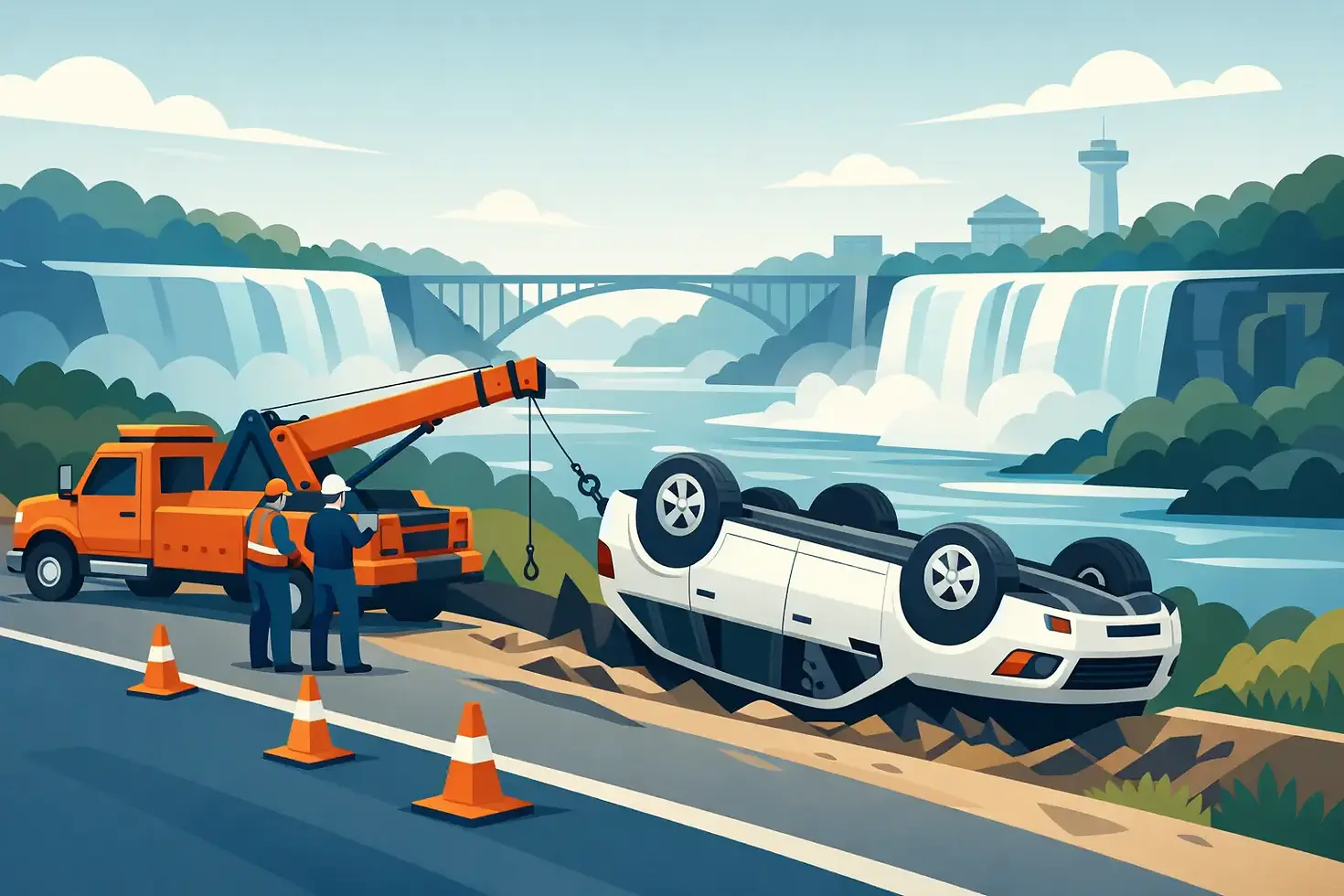
Overturned Vehicle Recovery Case Study in Niagara
A vehicle resting on its side or roof changes the priorities immediately. This overturned vehicle recovery case study uses a representative Niagara-area roadside scenario to show why a recovery is not simply a tow call. The first job is protecting people and controlling risk. Moving the vehicle comes after the scene is stable.
An overturn can follow a collision, a soft shoulder drop-off, black ice, a steep embankment, or a sudden evasive maneuver. Even when everyone is out of the vehicle and appears uninjured, hidden hazards can remain: leaking fluids, damaged batteries, unstable cargo, compromised glass, blocked lanes, and traffic approaching a scene it may not see in time.
For drivers, the practical message is simple. Call emergency services if there are injuries, fire, fuel leaks, or an immediate traffic danger. Then arrange qualified recovery support. Do not attempt to push, pull, or roll the vehicle back onto its wheels with another personal vehicle.
The Recovery Scenario
In this representative case, a passenger SUV left the roadway during wet conditions and came to rest on its passenger side near a drainage ditch. The driver and passenger had exited safely, but the vehicle was partly in the shoulder and partly against uneven ground. One lane remained open, creating an ongoing risk from passing traffic.
At first glance, the assignment might seem straightforward: upright the SUV and tow it away. The conditions made it more complicated. The roofline was in contact with the ground, the vehicle's center of gravity had shifted, and the ditch limited where recovery equipment could be positioned. A rushed pull could have caused the SUV to slide, rotate unexpectedly, sustain further damage, or create another hazard for the people standing nearby.
This is where professional judgment matters. Every overturned vehicle has a different weight distribution, damage pattern, resting angle, and recovery path. The right equipment and method depend on those conditions, not on a one-size-fits-all response.
First Priority: Secure the Scene
Before recovery equipment is set up, trained operators assess the full scene. They look at traffic flow, road width, ground conditions, utility hazards, fluid leaks, vehicle stability, occupant status, and the safest area for the recovery truck. If police, fire, or paramedics are present, the recovery plan must work within the incident command and traffic-control measures already in place.
In this case, the operator established a protected work area and positioned the recovery unit where it could work without adding exposure to traffic. The driver and passenger were kept away from the SUV and away from the active recovery zone. This matters because an upright operation can involve tensioned lines, shifting weight, and sudden movement if a damaged vehicle catches or releases against the ground.
The operator also checked for loose items and potential fluid concerns. A vehicle on its side may have fuel, oil, coolant, or battery fluid in places they would not normally be. Damaged components can create additional hazards long after the crash itself.
Why Traffic Control Cannot Be an Afterthought
Many recovery scenes become more dangerous after the initial collision because drivers approaching the area are distracted or traveling too fast for the conditions. Warning lights, proper vehicle positioning, visible safety equipment, and coordination with first responders create time and space for the work to happen safely.
On a narrow road, traffic control may take longer than the actual upright operation. That is not a delay for its own sake. It is part of protecting the customer, the public, first responders, and the recovery crew.
Planning the Upright Operation
Once the scene was stable, the operator evaluated the SUV's condition and selected secure attachment points designed to manage the vehicle's movement during recovery. The goal was controlled rotation, not force. A recovery operator must consider how the vehicle will travel as it returns to its wheels, where the weight will transfer, and what may happen when tires touch the ground again.
The ground conditions were a key factor in this case. Soft or sloped terrain can affect the recovery truck's stability and change the direction a vehicle moves under load. The operator selected a position that allowed for a measured recovery path while avoiding the ditch and minimizing the chance of the SUV sliding toward traffic.
Equipment selection also depends on the vehicle. A compact sedan, loaded pickup, commercial van, and heavy-duty truck require very different recovery planning. Vehicle weight alone does not tell the whole story. Cargo, damage, terrain, axle condition, and access all affect the recovery approach.
Regional Towing has served the Niagara Region since 1988, and that local experience matters when conditions are changing quickly. Rural shoulders, busy regional roads, winter weather, low-clearance areas, and commercial traffic all call for operators who understand both recovery equipment and the environment around the vehicle.
Controlled Recovery, Not a Quick Pull
With the work zone established and the recovery plan in place, the SUV was returned to an upright position in a controlled sequence. The operator monitored the vehicle continuously for shifting, binding, or signs that a damaged component was affecting the movement. The objective was to bring the vehicle down steadily, with as little additional impact as possible.
Once upright, the job was not over. The SUV needed another inspection before transport. The tires, steering, suspension, glass, lights, underbody, and fluid condition all required attention. An overturned vehicle may look driveable after it is set back on its wheels, but it can have damage that makes it unsafe to move under its own power.
In this scenario, the vehicle was prepared for transport rather than released to drive away. That decision protects the owner from a second incident. A tow to a repair facility, collision center, secure storage location, or another destination gives the vehicle a proper chance to be inspected before returning to the road.
Protecting the Vehicle After It Is Upright
A careful recovery also considers what happens after the vehicle is loaded. Damaged body panels can shift, loose glass can fall, and compromised tires or suspension can make ordinary loading unsafe. Proper securement is essential for the trip from the incident scene to the next location.
For customers, this is one reason to choose a full-service recovery provider rather than treating an overturned vehicle as a routine tow. The recovery process and the transport process are connected. Both must be handled correctly.
What This Overturned Vehicle Recovery Case Study Shows
The central lesson from this overturned vehicle recovery case study is that the safest solution is rarely the fastest-looking one. A trained operator needs time to assess the scene, choose appropriate equipment, stabilize the vehicle, manage traffic exposure, and determine whether the vehicle can be safely transported.
It also shows why drivers should avoid taking matters into their own hands. Well-meaning friends, pickup trucks, straps, and improvised pulls can turn a damaged vehicle into a serious injury risk. Without the right recovery equipment, training, and controlled work zone, it is difficult to predict how an overturned vehicle will respond.
The correct approach can vary. A vehicle on a flat shoulder may be recovered differently from one in a ditch, against a guardrail, beneath a bridge, or carrying commercial cargo. Weather, road conditions, injuries, law enforcement requirements, and available access can all change the plan.
What Drivers Should Do After an Overturn
If your vehicle overturns, focus first on people, not the vehicle. Move to a safe location if you can do so without entering traffic. Call 911 when anyone is injured, there is a fire risk, or the scene creates a roadway hazard. Do not remain inside a damaged vehicle unless leaving it would place you in greater danger.
After emergency needs are addressed, document the situation from a safe distance if conditions allow. Avoid touching leaking fluids, damaged batteries, or deployed airbag components. Keep children, pets, passengers, and bystanders clear of the vehicle and the recovery area.
When recovery support arrives, provide clear details about the location, vehicle type, whether it is on its side or roof, road access, and any known hazards. Accurate information helps dispatch send equipment suited to the job.
An overturned vehicle is stressful enough without adding avoidable risk. Give the scene space, follow first-responder directions, and let a qualified recovery team make the vehicle safe before it is moved.


