How to Change a Flat Tire Safely on the Road
- Aug 13
- 5 min read
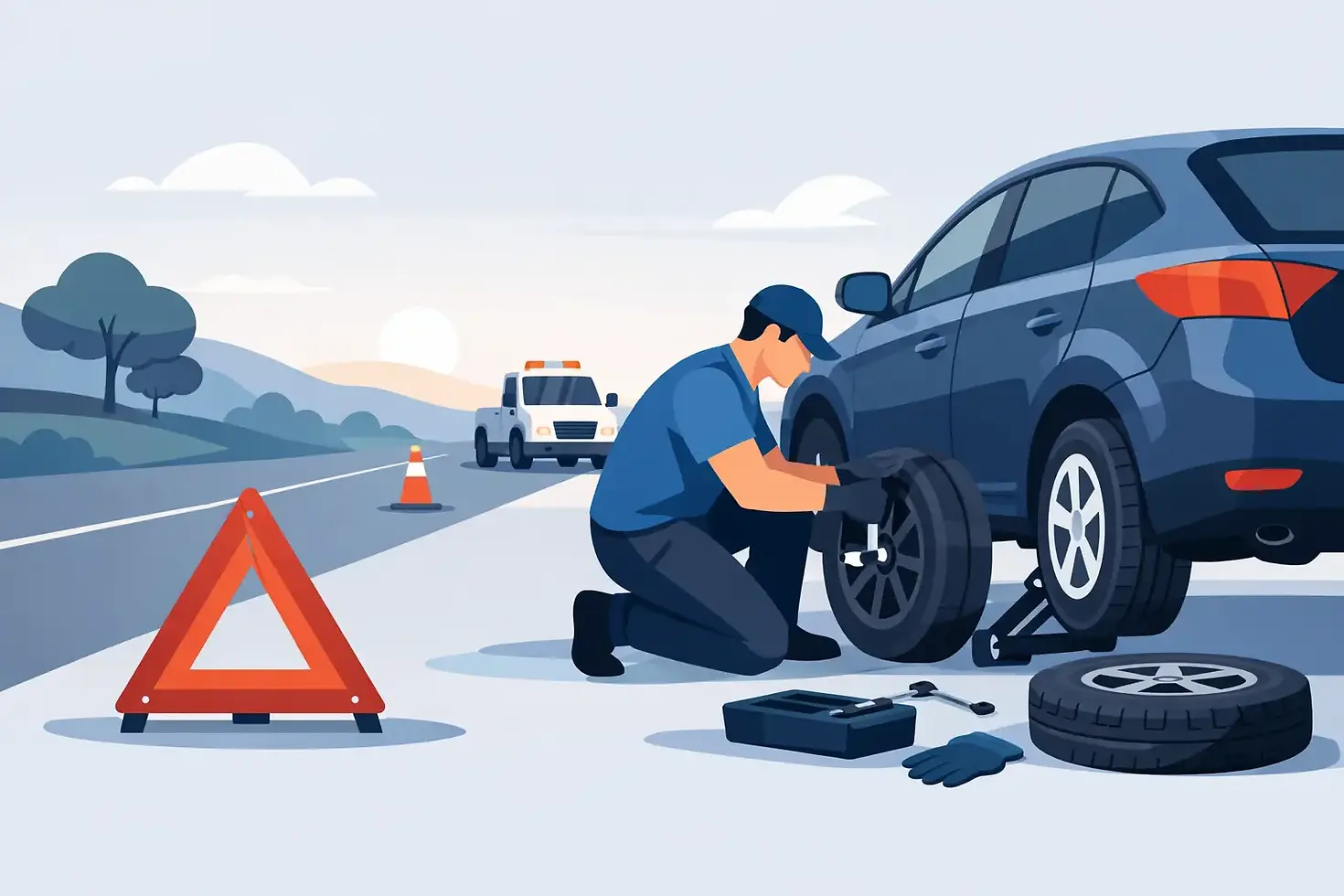
A flat tire can turn a normal drive through the Niagara Region into a roadside emergency in minutes. Knowing how to change a flat tire can get you moving again, but only when the location, weather, traffic, and condition of your vehicle make it safe to do so. If you are on a busy road, unstable shoulder, bridge, curve, or highway, do not take unnecessary risks. Move as far from traffic as possible and call for professional roadside assistance.
Before You Change a Flat Tire, Get to a Safe Location
Do not brake hard the moment you realize a tire is flat. Keep a firm grip on the steering wheel, slow down gradually, and turn on your hazard lights. Aim for a level, solid surface away from moving traffic. A parking lot, wide shoulder, or quiet side street is far safer than a narrow roadside.
Avoid stopping on grass, gravel, loose soil, an incline, or soft pavement. Your jack needs firm ground to support the vehicle. If it shifts while the vehicle is raised, serious injury or vehicle damage can result.
Put the vehicle in park and set the parking brake. For a manual transmission, leave it in first gear or reverse and set the parking brake. If you have wheel wedges or sturdy blocks, place them behind or in front of the tires that will remain on the ground. This reduces the chance of the vehicle rolling while you work.
If it is dark, rainy, snowing, or visibility is poor, your risk increases. Stay inside the vehicle with the doors locked if you cannot safely work away from traffic. A trained towing operator can change the tire or tow the vehicle to a safe repair location.
What You Need to Change a Flat Tire
Most vehicles have the basic equipment stored under the trunk floor, behind a cargo-area panel, or beneath the rear seat. Check your owner's manual before an emergency happens so you know where everything is located.
You will generally need a properly inflated spare tire, a jack, a lug wrench, and your vehicle owner's manual. A flashlight, gloves, reflective vest, wheel wedges, and a tire pressure gauge are also worthwhile additions to your roadside kit.
Take a moment to inspect the spare before relying on it. A compact temporary spare is not intended for regular driving, long distances, or highway-speed travel. If the spare is damaged, flat, or missing, changing the tire will not solve the problem.
Loosen the Lug Nuts While the Tire Is on the Ground
Remove the hubcap or wheel cover if it blocks access to the lug nuts. Some vehicles have a small notch that allows you to pry the cover off with the flat end of the lug wrench. Set the cover and any retaining pieces where they will not roll into traffic.
Use the lug wrench to turn each lug nut counterclockwise. Loosen each one about a quarter to half turn, but do not remove it yet. This is much easier and safer while the tire is still touching the ground because the wheel cannot spin freely.
Lug nuts may be tight from normal driving, corrosion, or previous service. Use steady pressure rather than jumping on the wrench or using an extension that could slip. If a lug nut will not move and you are in an unsafe area, stop and call for help.
How to Change a Flat Tire Step by Step
Locate the correct jack point for your vehicle. These reinforced areas are usually behind the front wheel or ahead of the rear wheel, often marked by small notches or arrows along the vehicle's frame. The owner's manual shows the exact location.
Place the jack directly under that point. Positioning it under a thin body panel, suspension component, or unapproved frame area can bend the vehicle or cause the jack to fail.
Raise the vehicle slowly until the flat tire is about two inches off the ground. Do not put any part of your body beneath the vehicle. A roadside jack is made to lift a vehicle briefly for a tire change, not to support someone working underneath it.
Now remove the loosened lug nuts completely and place them together in a clean, visible spot. Pull the flat tire straight toward you. If it is stuck from rust or corrosion, do not crawl under the vehicle or strike the wheel aggressively. A firm pull and slight rocking motion may release it. If it does not, roadside assistance is the safer choice.
Line up the spare tire with the wheel studs and push it onto the hub. Install the lug nuts by hand first. Turn them clockwise until they are snug enough to hold the wheel in place, but do not fully tighten them while the tire is off the ground.
Lower the Vehicle and Tighten the Lug Nuts Correctly
Lower the vehicle carefully until the spare just contacts the ground and cannot rotate. Tighten the lug nuts in a star or crisscross pattern, rather than going around the wheel in a circle. This helps the wheel seat evenly against the hub.
Lower the vehicle fully, remove the jack, and tighten the lug nuts again in the same star pattern. Apply firm, controlled force. Your owner's manual may list the proper torque specification, but a professional should check the lug nuts with a torque wrench as soon as possible.
Replace the hubcap only if it fits the spare correctly. Many compact spares will not accept the original wheel cover. Put the flat tire, jack, and tools back in the vehicle so they do not become loose during the drive.
Drive Carefully on a Spare Tire
After changing the tire, check the spare's pressure if you have a gauge. Then drive directly to a tire shop or service center. Temporary spares are commonly limited to lower speeds and short distances, but the exact limit is printed on the tire sidewall or stated in your owner's manual.
Avoid hard braking, sharp turns, heavy loads, and unnecessary highway travel. A compact spare may have less grip and a different diameter than your regular tires, which can affect braking, handling, and some all-wheel-drive systems.
Your flat tire may be repairable if the puncture is small and located in the tread area. Damage to the sidewall, a large cut, a bent wheel, or driving while the tire was severely underinflated usually means replacement is necessary. Do not assume a can of sealant is a permanent repair.
When Calling for Help Is the Safer Decision
Changing a tire is not always the right roadside move. Call for assistance when traffic is close, the road surface is unstable, you do not have a usable spare, the lug nuts are seized, or the vehicle cannot be safely raised. The same applies if you are not physically comfortable doing the work or are traveling with children who cannot safely wait outside the vehicle.
For drivers in the Niagara Region, Regional Towing provides 24/7 roadside assistance from trained operators who can help with a flat tire or arrange safe towing when a roadside repair is not practical. This is often the better option after dark, during severe weather, or on high-speed roads.
A flat tire is frustrating, but rushing can make it dangerous. Keep your emergency equipment in good condition, inspect your spare at regular service intervals, and choose safety over speed whenever the roadside situation does not feel right.


