A Clear Guide to Roadside Assistance
A dead battery at night, a flat tire on the shoulder, or an engine that quits in traffic can turn a normal drive into a stressful situation fast. This guide to roadside assistance is built for that exact moment - when you need clear answers, quick decisions, and help you can trust.
Roadside assistance is not just towing. It is the first layer of help when your vehicle becomes unsafe, disabled, or stuck. In some cases, the problem can be fixed on the spot. In others, the safest move is a tow to a repair facility, your home, or another secure location. Knowing the difference matters, especially when time, traffic, weather, or personal safety are involved.
What roadside assistance actually covers
Most drivers think of roadside assistance as a jump-start or a tow, and those are two of the most common calls. But a full-service provider may also handle lockouts, fuel delivery, tire changes, winch-outs, accident recovery, and transport for vehicles that cannot be safely driven.
The exact service depends on the condition of the vehicle and the environment around it. A flat tire in your driveway is very different from a flat tire on a busy highway shoulder. A vehicle stuck in snow may only need a controlled pull. A damaged suspension or broken axle usually means the vehicle should not be moved without proper equipment.
That is why good roadside assistance starts with assessment. A trained dispatcher or operator should ask where you are, what the vehicle is doing, whether it is blocking traffic, and whether there are any immediate hazards. The goal is not to slow things down. It is to send the right kind of help the first time.
A practical guide to roadside assistance calls
If you have never needed roadside help before, the process can feel uncertain. In reality, the best approach is simple. First, think about safety. If your vehicle can be moved, get it to the safest nearby location. If it cannot, turn on your hazard lights, stay aware of traffic, and avoid standing near moving vehicles.
Next, be ready to describe your location clearly. An exact address is ideal, but roadside calls often happen where there is no obvious street number. Highway direction, nearest exit, mile marker, intersection, landmark, or GPS pin can all help. The clearer your location, the faster the response.
Then explain the problem in plain language. You do not need to diagnose your car. Saying "the engine will not start," "the front passenger tire is flat," or "the car slid into a ditch" is enough. That gives the dispatcher a workable picture of what equipment and operator training may be needed.
You should also ask what type of service is being sent and whether the issue can likely be handled roadside or will require towing. Not every problem can be fixed where the car sits. Sometimes the safest and most cost-effective move is to tow immediately instead of attempting a temporary fix.
When roadside help is enough and when you need a tow
This is where many drivers hesitate. They hope the issue is minor and wait too long to request the right service. In some situations, roadside assistance is the right first step. A dead battery, empty fuel tank, lockout, or straightforward tire change can often be handled without towing.
Other situations call for a tow from the start. If the vehicle was in a collision, is leaking fluid, has steering or brake problems, overheated severely, has major tire or wheel damage, or will not run after repeated attempts, driving it further can create more damage or put you at risk.
There is also an "it depends" category. For example, a warning light by itself does not always mean the vehicle must be towed, but a warning light paired with smoke, loss of power, or unusual noise is a different story. A car stuck in snow may need a simple pull, but if it is buried, angled awkwardly, or close to a drop-off, recovery equipment and an experienced operator become much more important.
Common roadside assistance services
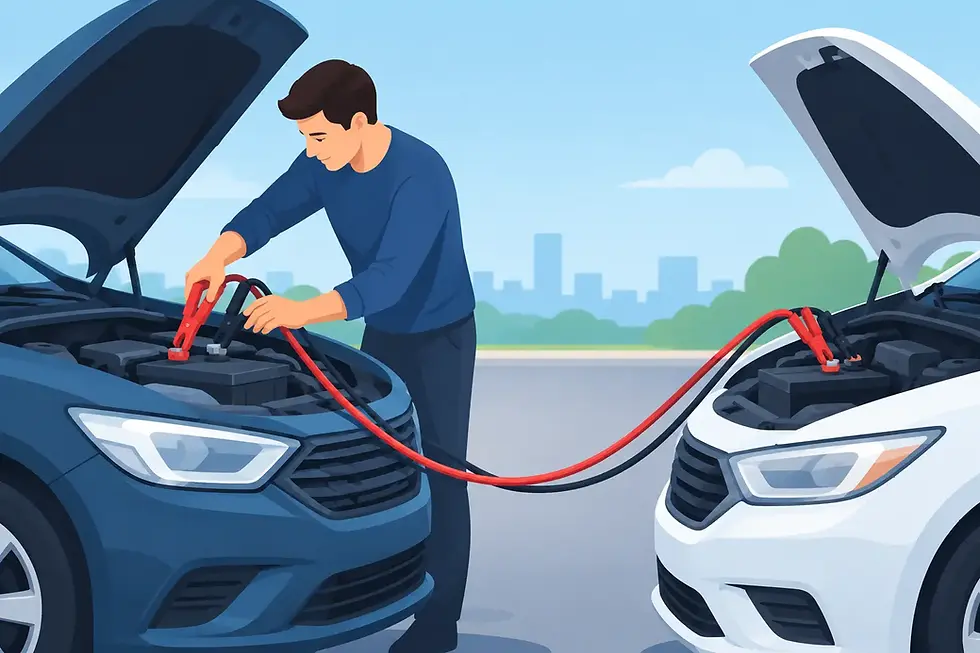
Battery service is one of the most requested calls. Sometimes a jump-start gets you moving right away. Sometimes the battery is too far gone, there is a charging system issue, or the vehicle has an electrical fault that makes towing the safer option.
Flat tire assistance sounds straightforward, but not every roadside tire call ends with a spare installed. Some vehicles do not carry a spare at all. Others have damaged lug nuts, wheel locks, or tire damage that makes roadside replacement impossible. That is another reason experienced assessment matters.
Fuel delivery helps when the tank is empty or lower than expected, but it is not a fix for every no-start issue. If fuel is not the real problem, the vehicle may still need further service.
Lockout assistance can get you back into your vehicle without damage when handled properly. Modern vehicles, however, can be more complicated than older models, and improper entry methods can create expensive problems.
Winch-out and recovery calls are a separate category from basic roadside help. A vehicle stuck in mud, snow, a ditch, or an embankment may require specialized equipment, traffic control awareness, and a careful recovery plan. This is not a place for guesswork.
Costs, coverage, and what drivers should ask
One reason people delay calling is uncertainty about price. That is understandable. In an emergency, nobody wants surprises. Rates can vary based on the service needed, vehicle type, distance, location, time of day, and level of recovery required.
A jump-start is usually not priced like a heavy recovery. A local tow is different from a long-distance tow. A passenger car is different from a commercial vehicle. If your vehicle is in a ditch, underground garage, construction area, or active traffic lane, the complexity can change the equipment needed and the cost.
Ask for clear pricing information before service begins whenever possible. You should understand the basic service charge, towing distance if applicable, and whether there may be additional charges for storage, after-hours conditions, recovery work, or specialized equipment. Transparent operators do not avoid these questions.
If you have roadside coverage through your insurer, auto club, warranty, or fleet account, confirm what is included. Some plans only reimburse up to a limit. Others restrict towing distance or service types. That does not mean coverage is useless. It just means you should know where your responsibility begins.
How to choose a roadside assistance provider fast
When you are stranded, you may not have time for deep research. Still, a few quick checks can help you avoid a poor experience. Look for a company with a real local presence, clear service area, 24/7 availability, and a track record that suggests consistency under pressure.
Reviews matter, but not just the star rating. Look for comments about response time, professionalism, communication, and whether the operator handled the vehicle carefully. In roadside situations, those details matter more than marketing language.
Experience also matters. A provider that handles both standard roadside calls and more complex towing or recovery work is usually better positioned to respond correctly when the problem turns out to be more serious than it first appeared. In the Niagara Region, Regional Towing has built that kind of trust by combining around-the-clock service with trained operators and long-standing local coverage.
Safety while you wait
After you call, your focus should stay on personal safety. If you are on a busy roadway and the vehicle is in a dangerous position, staying buckled inside may be safer than standing nearby. If you are well off the road in a safe area, waiting outside the vehicle may make more sense. The right choice depends on traffic, weather, visibility, and where the vehicle is positioned.
Keep your hazard lights on if the battery allows. At night, use interior lighting carefully so you remain visible without draining power unnecessarily. If you have emergency triangles or flares and it is safe to place them, use them. If not, do not take risks just to mark the scene.
Be cautious with offers of help from passing drivers. Many people mean well, but your safest option is usually to wait for the dispatched professional service you requested.
What every driver should keep in the car
A good roadside kit helps, but it should stay realistic. You do not need to turn your trunk into a repair shop. A phone charger, flashlight, reflective vest, gloves, basic first-aid kit, bottled water, and seasonal items like a blanket or scraper go a long way. Keep your registration, insurance information, and emergency contacts easy to access.
It also helps to know whether your vehicle has a spare tire, a repair kit, wheel lock key, or special towing instructions. Many drivers only learn what is missing after a breakdown happens.
The best guide to roadside assistance is not about assuming the worst. It is about being ready to act calmly, ask the right questions, and get the right help without losing time. When the unexpected happens, a reliable responder can turn a stressful stop into a manageable delay - and that is often the difference that matters most.